
Hospice Resources
When Home Isn’t Enough: Signs it’s Time for Residential Hospice

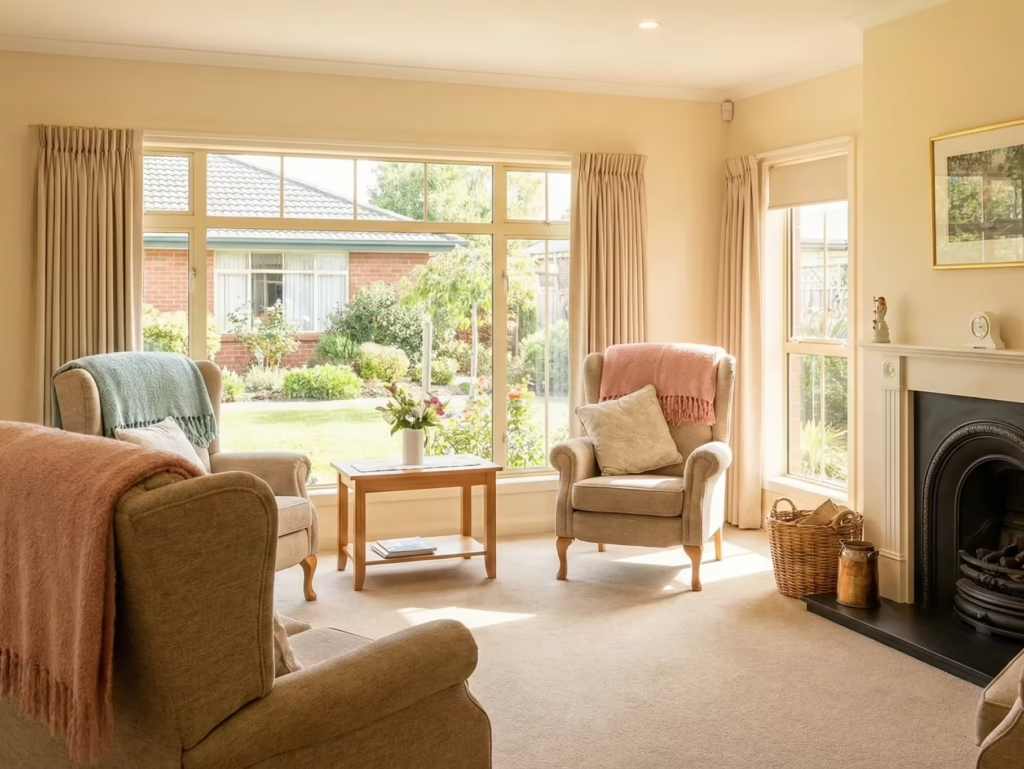
The holidays often bring a “keep it together” mentality for families caring for a loved one with a terminal illness. You push through the exhaustion to share one more meal, one more tradition, and one more quiet moment by the fire.
However, as the decorations are packed away and the routine of the New Year sets in, many caregivers hit a wall. The realization settles in: the level of care required is no longer sustainable at home.
Choosing a residential hospice—often called a “residential care setting”—is not a sign of failure. It is a transition from being a primary medical provider back to being a son, daughter, or spouse. Here are the clinical and emotional signs that it may be time to consider the resident care services at Fairfield County House.
1. Unmanaged Pain or Distressing Symptoms
Home hospice provides incredible support, but it relies on family members to administer medications. If your loved one is experiencing breakthrough pain, severe respiratory distress, or agitation that “as needed” home medications aren’t touching, they may need 24/7 clinical oversight. In a residential setting, professional nursing staff can adjust protocols in real-time to ensure comfort.
2. Caregiver Burnout is Impacting Safety
Caregiving is a 24-hour job. If you are experiencing extreme sleep deprivation, physical strain from lifting your loved one, or “compassion fatigue,” the safety of both the patient and the caregiver is at risk. When the physical demands of care lead to medication errors or household accidents, a residential setting for hospice care provides the safety net you both need.
3. The “Hospitalization Loop”
Is your loved one frequently being transported to the ER for symptom crises? Hospitals are often loud, bright, and frantic—the opposite of what an end-of-life experience should be. Moving to a dedicated residence for people receiving hospice care like Fairfield County House breaks the cycle of hospitalization, providing a stable, peaceful environment where the focus is entirely on quality of life.
4. Complex Medical Needs
As certain illnesses progress, they may require specialized equipment or wound care that is difficult to manage in a standard bedroom. Residential hospice facilities are designed specifically for these needs, blending the high-tech requirements of end-of-life care with the “high-touch” feel of a family home.
5. Your Home No Longer Feels Like “Home”
When a living room becomes a staging area for oxygen tanks, hospital beds, and rotating shift workers, the “sanctity” of the home can feel lost. Residential hospice allows the family to return to a supportive environment. At Fairfield County House, we encourage families to gather, share meals, and spend time together in our peaceful common areas, restoring the family dynamic.
6. Social Isolation
Caring for a terminal patient at home can be incredibly isolating for both the patient and the family. Residential hospice provides a circle of support. With staff, volunteers, and other families who “get it,” the journey becomes a shared experience rather than a lonely one.
7. The Need for Spiritual and Emotional Wraparound Support
End-of-life care is about more than physical symptoms. If your family is struggling with the emotional weight of a “goodbye,” the interdisciplinary team at a residence for people receiving hospice care provides the counseling and spiritual support necessary to navigate this transition with dignity.
Why Fairfield County House?
Located in a quiet neighborhood in Stamford, CT, Fairfield County House is a nonprofit residence that offers a warm, home-like alternative to institutional care. We provide 24/7 nursing care in a setting that feels like a private residence—because it is.
Take the Next Step: You don’t have to carry this burden alone. If the “tipping point” has arrived, we are here to help.
- Tour Our House: See the Fairfield County House Difference
- Contact Us: Speak with a Care Coordinator
- Support Our Mission: How You Can Help

Fairfield County House Blog
More from our team.
Insights, guidance, and stories from the heart of our community.